The Silent Killer: How Summer Humidity and Heat Affect Your Car
As temperatures soar across the Delaware Valley and humidity levels climb off the charts, most area drivers focus on keeping their car's air conditioning blasting. However, an invisible danger is lurking beneath the hood, where extreme local conditions silently degrade the essential liquids that keep your vehicle running smoothly. Understanding how the Delaware Valley’s summer humidity and heat affect your car's internal fluids is crucial to preventing unexpected breakdowns on I-95, I-76, or the Blue Route.
Why Summer Heat and Humidity Are the Ultimate Automotive Enemies
In our region, severe humidity trapped between the Delaware and Schuylkill Rivers often pushes the heat index into dangerous territory. It's the heavy, oppressive heat that you immediately feel when you step outside on a scorching July afternoon. You aren’t the only one who feels it. Your vehicle feels it too, but on a much more intense scale.
Under the hood of a modern vehicle, operating temperatures regularly exceed 200 degrees Fahrenheit under normal conditions. When you add rising heat index numbers and bumper-to-bumper traffic on the Schuylkill Expressway during rush hour to the mix, that under-hood environment transforms into a veritable furnace.
Automotive fluids that keep your car working are engineered to operate within specific temperature ranges. They act as lubricants, coolants, and hydraulic mediums that allow complex mechanical systems to work together without grinding themselves to pieces. However, extreme heat accelerates chemical degradation. It triggers oxidation, a process where the fluid reacts with oxygen, causing it to break down, lose its protective qualities, and turn into a thick, sludgy residue.
Simultaneously, the high humidity typical of a Greater Philadelphia summer introduces moisture into systems that thrive on being completely dry. Over time, this atmospheric moisture can seep into certain fluid reservoirs, lowering the boiling point of the liquid and encouraging internal corrosion. Together, the heat and humidity of the Delaware Valley area in the summer form a destructive duo that can quietly destroy your vehicle’s most expensive components from the inside out.
The Transmission Crisis: Heat, Slipping, and Sluggish Shifts
Your vehicle's transmission is a mechanical marvel, relying on a sophisticated network of gears, clutches, and valves to transfer power from the engine to the wheels. The lifeblood of this system is transmission fluid. Not only does this fluid lubricate moving parts, but it also provides the hydraulic pressure required to shift gears and cools the entire system.
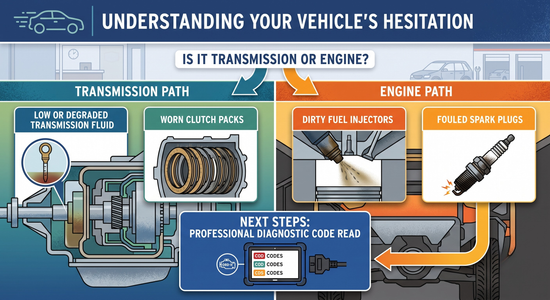
When summer temperatures skyrocket across the Delaware Valley area, your transmission fluid faces an uphill battle. As the fluid overheats, its viscosity drops, meaning it becomes thin and watery. This thinning reduces its ability to create a protective barrier between heavy metal gears. Consequently, you might begin to notice sluggish gear shifts in summer traffic on your commute home via the Ben Franklin Bridge or Washington Street in Wilmington. Instead of the crisp, seamless transitions you are used to, the vehicle may hesitate, rev unexpectedly between gears, or feel heavy and non-responsive.
Even worse, thin and degraded fluid struggles to maintain the hydraulic pressure necessary to keep clutches firmly engaged. This leads directly to your transmission slipping during the summer heat, a frightening phenomenon. You might press the gas pedal and hear the engine roar, but the vehicle won't accelerate; a dangerous scenario when trying to merge onto I-295. That’s your transmission slipping. Every second a transmission spends slipping generates massive amounts of friction and localized heat, which rapidly accelerates internal wear and can lead to transmission failure.
The Engine’s Lifeline: Coolant Breakdown in Extreme Heat
If the transmission is the muscles of your car, the cooling system is its shield. The primary job of engine coolant—a carefully balanced mixture of water and specialized antifreeze—is to absorb heat from the engine block and dissipate it through the radiator. In a Delaware Valley area winter, it keeps things from freezing; in our intense summers, it keeps things from boiling over while idling at a red light in King of Prussia or Newark, DE.
However, local summer conditions push this system to its absolute limits. A major issue that drivers encounter during the warmest months of the year is coolant breakdown in high heat. Over time, the protective chemical additives within your coolant deplete. When subjected to prolonged, intense thermal stress from a sustained Philly heatwave, the fluid loses its ability to inhibit rust, scale, and corrosion within the engine block and radiator channels.
When coolant breaks down, its boiling point drops significantly. When that happens, it can no longer efficiently transfer heat away from vital engine components. This causes your engine to run hotter than intended, which can warp cylinder heads, destroy head gaskets, and eventually crack the engine block itself.
Beyond the Basics: Other Vital Fluids At Risk
While your transmission and cooling systems are the most vulnerable to summer extremes, they are far from the only areas of concern. Several other critical fluids require careful monitoring during a summer heatwave:
- Engine Oil: Just like transmission fluid, engine oil thins out when exposed to high heat. If the oil becomes too thin, it cannot maintain the necessary oil pressure or provide adequate lubrication to the engine's pistons, crankshaft, and camshafts. This results in metal-on-metal friction, accelerating engine wear.
- Brake Fluid: Brake fluid is hygroscopic, meaning it naturally absorbs moisture from the surrounding air. In the high-humidity environments of Southeastern Pennsylvania, South Jersey, and Delaware, this absorption rate increases. If your brake fluid has absorbed water, that water can boil and turn into compressible vapor under heavy braking, resulting in a terrifyingly soft, "spongy" brake pedal when you need to stop suddenly on Route 1.
- Power Steering Fluid: Often overlooked, power steering fluid is a hydraulic fluid that suffers from thermal breakdown just like transmission fluid. Overheated power steering fluid can cause stiff steering, whining noises when turning, and premature wear on the power steering pump.
Protect Your Investment: The AAMCO Advantage
The most dangerous aspect of fluid degradation is that it rarely announces itself with a loud noise or an immediate warning light until major damage has already occurred. By the time you notice your car struggling, the internal components have likely already sustained preventable wear and tear.
Don't wait for a breakdown on the side of Route 202 to take action. Proactive maintenance is the cheapest and most effective way to guarantee your vehicle survives the summer months unscathed.
At AAMCO, our expert technicians serve communities all over the Delaware Valley and specialize in identifying the subtle, early warning signs of fluid breakdown before they turn into costly mechanical disasters. When you visit an AAMCO location in the Delaware Valley, we don’t just look at fluid levels; we analyze the condition, clarity, and viability of your vehicle’s lifeblood. Whether you need a comprehensive cooling system flush, a precision transmission fluid service, or a thorough vehicle health check, we have the specialized diagnostics and decades of expertise to keep you moving safely from Philly to the Atlantic coast.
Protect your vehicle, your wallet, and your peace of mind this summer. Visit My Local AAMCO today to find a Delaware Valley AAMCO service center near you and schedule a vehicle inspection to check your fluids.
Frequently Asked Questions (FAQs)
Why does the summer heat in Delaware Valley cause my car's transmission to slip?
When ambient temperatures rise, your transmission has to work significantly harder to stay cool. The transmission fluid is responsible for maintaining the hydraulic pressure needed to change gears and lock clutch plates together. High summer heat causes the chemical structure of this fluid to break down, significantly reducing its thickness (viscosity). When the fluid becomes too thin and watery, it cannot generate or sustain the necessary hydraulic pressure. As a result, the internal clutch plates cannot grip each other tightly enough and begin to slide past one another. This mechanical sliding is what causes the sensation of transmission slipping during summer heat. If you notice your engine revving high but your car failing to move forward smoothly, it is a clear sign that your transmission fluid is failing and needs immediate professional attention.
What exactly happens during coolant breakdown in extreme heat?
Engine coolant is not just colored water; it is a precisely engineered chemical solution designed to prevent boiling, freezing, and internal corrosion. Over time, and especially when subjected to intense summer heat, the protective chemical additives in the coolant oxidize and deplete. When this happens, the fluid undergoes a chemical transformation known as coolant breakdown in extreme heat. The fluid loses its ability to effectively regulate temperatures, meaning its boiling point drops. Additionally, it becomes highly acidic. This acidic fluid begins to corrode the internal metal components of your engine block, water pump, and radiator. Rust, scale, and debris accumulate in the cooling channels, forming blockages that restrict fluid flow. Ultimately, this breakdown prevents heat from leaving the engine, leading to severe overheating, blown head gaskets, or cracked engine blocks.
Why do I experience sluggish gear shifts in summer traffic compared to winter driving?
In winter, the challenge for automotive fluids is staying fluid enough to flow freely. In summer traffic, the exact opposite occurs. When you are stuck in gridlock on a hot summer day, there is very little airflow passing through your vehicle's radiator and transmission cooler to naturally lower system temperatures. Heat radiating off the asphalt on congested roads like I-95, combined with the heat generated by your stopping and starting in gridlock, causes transmission fluid to overheat. This plummets the fluid's hydraulic efficiency, disrupting the balance required for quick gear changes and resulting in sluggish gear shifts in summer traffic.
How does high atmospheric humidity affect my vehicle's braking system?
Many drivers are surprised to learn that humidity can directly impact how their brakes feel and perform. Brake fluid is a hygroscopic fluid, meaning it acts like a sponge, actively attracting and absorbing moisture from the air. This process occurs naturally over time through microscopic pores in rubber brake hoses and seals, but it accelerates significantly during periods of high summer humidity. When water mixes with brake fluid, it dramatically lowers the fluid's boiling point. Under heavy braking, such as stopping suddenly in traffic or driving down a steep hill, the brake pads generate massive amounts of heat. If your brake fluid contains absorbed moisture from the humid air, that moisture can flash boil into vapor. Unlike liquid, vapor can be compressed. When you press the brake pedal, instead of pushing the brake pads against the wheels, you end up compressing the gas bubbles, resulting in a soft, "spongy" brake pedal and dangerously diminished stopping power.
Can I just top off my fluids at home to fix summer fluid problems?
While keeping your fluids at the correct level is important, simply topping them off is rarely a fix for heat-related fluid issues. If your fluids have already suffered from thermal breakdown or contamination, adding fresh fluid to a reservoir full of degraded fluid is like pouring clean water into a muddy puddle. The old, oxidized fluid will immediately contaminate the new fluid, neutralizing its protective qualities. Furthermore, low fluid levels usually indicate a deeper underlying issue, such as a leak or internal consumption, which needs to be professionally diagnosed. To truly protect your car from summer damage, the old, degraded fluid must be completely flushed out and replaced with fresh, high-quality fluid that meets your vehicle manufacturer’s exact specifications.
How often should I have my car's fluids checked during the summer months?
Ideally, you should have your fluids checked at the very beginning of the summer season before the extreme heat waves hit. This gives you a chance to address any vulnerabilities before they turn into full-blown breakdowns. If you plan on taking a long summer road trip, or if your daily commute involves spending hours in stop-and-go city traffic, it is wise to have your fluid levels and fluid condition inspected every 3,000 to 5,000 miles, or roughly whenever you get your oil changed. At AAMCO, we recommend a comprehensive check-up ahead of any major seasonal shift to ensure your vehicle is completely prepared for the unique environmental stresses ahead.
What are the visual signs that my transmission fluid or coolant has gone bad?
Fresh transmission fluid is typically a bright, translucent red or pink color and has a slightly sweet smell. If you check your transmission fluid and notice it has turned dark brown or black, looks cloudy, or smells distinctly burnt, it has suffered from severe thermal breakdown and requires an immediate flush. Fresh engine coolant is typically bright green, orange, pink, or blue, depending on your vehicle's make. If your coolant looks muddy, brown, rusty, or has floating debris or an oily sheen on top, it indicates that the fluid has broken down and internal corrosion or a leak is occurring.
Why should I trust AAMCO to handle my summer fluid services?
For decades, AAMCO locations across PA, NJ, and DE have been the trusted household name for complex automotive care, particularly when it comes to the most sensitive and expensive components of your vehicle: the transmission and engine cooling systems. Our technicians are trained to use state-of-the-art diagnostic equipment to accurately evaluate not just fluid levels, but the actual chemical health of your vehicle’s fluids. We understand the specific demands that summer traffic and extreme weather place on your car. When you choose an AAMCO in the Delaware Valley, you receive a thorough, transparent evaluation and expert service that preserves your vehicle's longevity. To keep your vehicle running smoothly all summer long, find your nearest service center by visiting My Local AAMCO.
Share