Why Regular Transmission Fluid Maintenance Matters Before Winter
Regular transmission fluid maintenance before winter can prevent delayed shifting, harsh gear engagement, and long-term wear. By ensuring your fluid is clean, at the right level, and of the correct type, you protect your transmission's components from unnecessary strain in freezing conditions.
Have you ever tried to drive on a frigid morning only to feel gear slippage or rough shifts? That's often due to thickened or degraded transmission fluid. Today, we're taking a closer look at why winter vehicle maintenance must include transmission fluid care, how to check fluid condition, when to schedule a fluid change, and the pitfalls to avoid in cold weather.
Can Cold Weather Affect Transmission Fluid?
Cold weather can make your vehicle behave differently, especially when temperatures drop below freezing. The transmission system feels this change more than most parts of your car. When transmission fluid thickens or breaks down in cold temperatures, it affects how smoothly your vehicle shifts and moves.
There are three main ways cold weather can affect transmission fluid:
- How temperature changes make the fluid thicker and slower to flow
- The effect of sluggish fluid on shifting and performance
- The long-term strain that cold starts place on the transmission
How Temperature Changes Make the Fluid Thicker and Slower to Flow
Transmission fluid acts as both a lubricant and a coolant for the gears and moving parts inside your transmission. In cold weather, the fluid's viscosity increases, which means it becomes thicker and flows less easily.
When this happens, the fluid can't circulate fast enough through the system right after you start your car. That delay in flow can cause rough shifting or delayed engagement when you shift from park to drive.
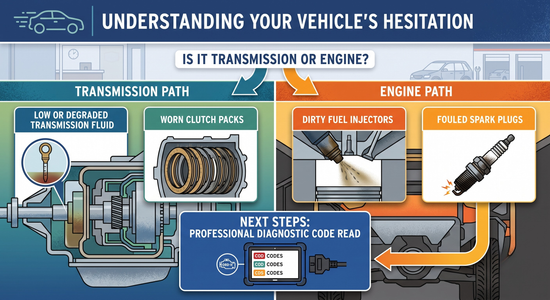
If you start your car on a freezing morning and notice it hesitates before moving, that's often because the fluid hasn't reached an ideal temperature yet. The lag in circulation means metal parts are briefly operating with limited lubrication, increasing friction and wear during those first few minutes of driving.
The Effect of Sluggish Fluid on Shifting and Performance
When the transmission fluid thickens, your car's transmission has to work harder. The gears don't move as smoothly, and you may feel jerking or slipping when shifting.
Automatic transmissions are especially sensitive to this because they rely on hydraulic pressure, which depends on fluid flow. If the fluid can't move easily, the system can't build proper pressure.
That poor fluid movement doesn't just make driving uncomfortable. It can also make your vehicle less fuel-efficient. The engine needs to put in more effort to compensate for the transmission's sluggish behavior, which means burning more fuel during cold starts or stop-and-go driving.
The Long-Term Strain That Cold Starts Place on the Transmission
Every time you start your vehicle in freezing weather, the transmission fluid must warm up enough to do its job. Over time, repeated cold starts can lead to small amounts of wear that add up. If the fluid is already old or contaminated, it becomes even less effective at protecting internal parts.
How to Tell if Transmission Fluid Is Still Good
Many drivers don't think much about transmission fluid until their vehicle starts shifting roughly or slipping gears. Yet checking this fluid is one of the simplest ways to protect your transmission and avoid expensive repairs. There are three main ways to check the condition of your transmission fluid:
- Looking at the color and clarity of the fluid
- Paying attention to the smell and texture
- Watching for warning signs in how the vehicle drives
Looking at the Color and Clarity of the Fluid
Healthy transmission fluid has a bright red or pink color and looks mostly clear. When the fluid starts to age, it becomes darker. A brown or black tint means it's breaking down and losing its ability to lubricate moving parts.
Dirty or cloudy fluid often carries small bits of metal or debris, which can scrape against internal parts. Checking the color and clarity gives you a quick idea of whether the fluid needs to be replaced. If you notice that it's turning dark or looks dirty, a transmission fluid change should be done soon.
Paying Attention to the Smell and Texture
Good transmission fluid doesn't have much of a smell. When it starts to burn or break down, it develops a sharp, burnt odor. That smell often means the transmission has been running too hot, or the fluid is no longer doing its job of cooling and protecting the system.
The texture can also reveal a lot. If the fluid feels gritty or sticky when you rub a small amount between your fingers, it's contaminated.
Fresh fluid should feel slick and smooth. Regular transmission maintenance helps prevent this buildup and keeps the fluid in good condition for longer.
Watching for Warning Signs in How the Vehicle Drives
Even if you don't check your fluid often, your car may give you hints that something isn't right. Delayed gear engagement, rough shifts, or slipping while driving can all mean the transmission fluid is old or low. If you experience any of these symptoms, it's time to inspect the fluid and possibly schedule a change.
Winter Transmission Care: Why Maintenance Is Especially Important Before Winter
As temperatures start to fall, your vehicle faces new challenges that can affect how well it runs. Transmission fluid plays a big part in keeping your car operating smoothly through the colder months.
Taking care of it before winter helps you avoid costly problems and keeps your transmission strong for the long term. There are three main reasons transmission fluid maintenance matters more before winter than at any other time of year:
- Preventing costly repairs caused by neglected maintenance
- Protecting transmission components from snow, ice, and road salt
- Supporting better fuel efficiency and performance during cold weather
Preventing Costly Repairs Caused by Neglected Maintenance
Neglecting your transmission fluid can lead to expensive repairs, especially once freezing temperatures arrive. When fluid becomes thick or contaminated, it can't flow properly through the system.
It leads to delayed shifting and more friction inside the transmission. Over time, that friction wears down metal parts and can lead to full transmission failure.
Cold weather makes these problems worse because thickened fluid struggles to reach all parts of the transmission during startup. Performing a transmission fluid change before winter helps you avoid these risks.
Fresh fluid protects your gears, reduces wear, and allows your vehicle to handle cold starts with less stress. Prevent transmission issues before they start by making transmission maintenance part of your fall car care routine.
Protecting Transmission Components From Snow, Ice, and Road Salt
Winter conditions bring challenges that go beyond low temperatures. Snow, slush, and road salt can build up under your car and affect seals, lines, and gaskets connected to the transmission. If small leaks start and go unnoticed, the transmission fluid level can drop quickly, leading to poor performance and internal damage.
Regular checks before winter can help you catch these problems early. A trusted technician can inspect for leaks and make sure the transmission case and cooler lines are clean and sealed. Clean, properly filled fluid keeps the system protected even when winter roads are at their worst.
Supporting Better Fuel Efficiency and Performance During Cold Weather
When transmission fluid flows smoothly, the transmission works with less effort. It helps your engine run more efficiently, which can improve fuel economy in cold conditions. Old or thick fluid forces the system to work harder, using more fuel just to move the same distance.
Winter driving already puts extra strain on vehicles, with longer warm-up times and heavier loads from snow or ice. Fresh fluid reduces this burden and keeps shifting smooth, even when temperatures drop below freezing. Including transmission maintenance in your winter vehicle maintenance plan helps your car perform at its best all season.
Frequently Asked Questions
Can Synthetic Transmission Fluid Improve Cold-Weather Performance?
Yes, synthetic transmission fluid often performs better in low temperatures. It resists thickening when it's cold, which means it flows more easily through the transmission. It helps the system build pressure faster and allows smoother shifting during cold starts. Synthetic fluid also holds up better against heat and wear, giving it a longer lifespan than most conventional fluids. Drivers in colder regions often see fewer shifting problems and better long-term protection when they use synthetic options.
How Often Should Transmission Fluid Be Replaced in Colder Climates?
The replacement schedule depends on your vehicle, driving style, and the conditions where you live. In very cold regions, transmission fluid can wear out faster due to a thicker consistency during startup and more frequent strain on internal parts. Many technicians recommend changing it every 30,000 to 50,000 miles, though some newer vehicles can go longer. If you drive in stop-and-go traffic or tow heavy loads, you might need to replace it sooner. Checking the color and smell of your transmission fluid regularly is the best way to decide when it's time for service.
Does Idling Help Warm Up Transmission Fluid in Winter?
Idling can help slightly, but it's not the most effective way to warm up your transmission. When your car idles, the engine warms faster than the transmission, which means the fluid doesn't reach its full operating temperature right away. The best way to warm it up is to drive gently for the first few miles. Light driving allows the transmission fluid to circulate through the system more evenly, which brings it to a safe temperature faster without wasting fuel.
What Are the Risks of Skipping Winter Transmission Maintenance?
Ignoring transmission maintenance before winter can lead to several issues. Old or dirty fluid thickens in cold weather, causing rough shifting or delayed engagement. That extra strain wears down gears, seals, and clutches over time. In severe cases, it can cause internal damage that leads to costly repairs. Even minor problems like small leaks can worsen in freezing temperatures. Taking care of maintenance before winter helps prevent transmission issues and avoids unexpected breakdowns when the weather is harshest.
Are There Transmission Additives That Help in Winter?
Some additives are made to improve transmission fluid performance in cold weather. They can: Reduce friction Help with fluid flow Protect against wear But not every vehicle needs them, and using the wrong type can cause harm. Before using any additive, check your owner's manual or talk with a trusted technician. Many modern transmission fluids already contain compounds that handle extreme temperatures well, so extra additives may not be necessary.
Can Low Tire Pressure Affect Transmission Performance in Winter?
Yes, low tire pressure can indirectly affect your transmission. When tires are underinflated, the engine and transmission work harder to move the vehicle, especially in cold conditions. That added strain can cause rougher shifting or delayed response. Checking tire pressure regularly helps reduce the workload on your transmission and improves fuel efficiency.
Do Short Winter Trips Hurt Transmission Health?
Frequent short trips in cold weather can shorten the life of your transmission fluid. The fluid doesn't have enough time to reach its full operating temperature, so moisture can build up inside the system. Over time, this moisture can thin the fluid and reduce its protective qualities. Taking a longer drive once a week can help burn off excess moisture and keep the fluid in better condition.
Can Snow or Ice Around the Transmission Cause Problems?
Yes, snow or ice buildup under your car can create pressure on transmission lines or covers. It can even cause small cracks or leaks if left for too long. After driving through heavy snow, check underneath your vehicle for buildup. Clearing packed snow helps prevent blockages and protects sensitive components from damage.
Cold Weather Driving Prep
Regular transmission fluid maintenance before winter helps protect your vehicle from wear, poor shifting, and costly repairs.
For over 60 years, AAMCO has been the name drivers trust for expert transmission and total car care. With more than 600 locally owned centers across North America, we provide reliable repairs, advanced diagnostics, and honest service, all backed by a nationwide warranty. From transmissions to tune-ups, AAMCO keeps your car running right.
Get in touch today to find out how we can help with your transmission!
Share