Winter Road Trip Car Prep | AAMCO Delaware Valley
Before a holiday road trip, check your tires, battery, brakes, fluids, belts, hoses, cooling system, and transmission. Pack a winter emergency kit and address warning signs before leaving. A pre-trip inspection is especially important when your route includes cold weather, heavy traffic, or several hours of highway driving.
Holiday travel across the Delaware Valley can mean stop-and-go traffic around Philadelphia, changing conditions between Pennsylvania, New Jersey, and Delaware, and long stretches on roads such as I-95, the Pennsylvania Turnpike, the Schuylkill Expressway, the New Jersey Turnpike, Route 42, or I-295. A vehicle that feels fine during short daily trips may respond differently when it is fully loaded and driven for hours in freezing temperatures.
This guide explains what to inspect, what to pack, and which warning signs should be handled before a winter road trip. Taking these steps can reduce the risk of a breakdown and help you travel with greater confidence.
Holiday Road Trip Car Checklist
Complete these checks before leaving for a long winter drive:
- Check all four tires for proper pressure, adequate tread, cracks, bulges, and uneven wear.
- Test the battery and inspect the terminals for corrosion or loose connections.
- Confirm that the brakes respond normally and do not grind, squeal, vibrate, or pull the vehicle to one side.
- Check the engine oil, coolant, brake fluid, transmission fluid, and windshield washer fluid.
- Inspect belts and hoses for cracks, fraying, stiffness, swelling, or leaks.
- Test the headlights, brake lights, turn signals, heater, defroster, and windshield wipers.
- Make sure the spare tire, jack, and tire-changing tools are present and usable.
- Pack a winter emergency kit that is appropriate for your route and passengers.
If the vehicle has been slow to start, leaking fluid, overheating, shifting poorly, making unusual noises, or displaying a warning light, schedule an inspection before the trip rather than waiting to see whether the problem gets worse.
Why Long Winter Drives Expose Vehicle Problems
Short trips and local commuting do not place the same demands on a vehicle as several continuous hours of highway driving. At highway speed, the engine, cooling system, transmission, tires, and charging system must work steadily. Added passengers and luggage can place even more demand on the vehicle.
Heat and sustained operation can make a small problem more noticeable. A minor coolant leak may lead to overheating. Old transmission fluid may provide less effective lubrication and cooling. A worn belt or hose may fail after hours of continuous use. A weak battery may struggle after the vehicle sits overnight in freezing weather.
Pay attention to recent changes in the way the vehicle starts, drives, stops, or shifts. A road trip is not the time to test whether a warning sign will resolve on its own.
Check Tires and Traction
Tires are the vehicle's only contact with the road, so tire condition affects braking, steering, and traction. This becomes especially important on cold pavement, standing water, slush, snow, and ice.
Tire Tread
Inspect the tread across the full width of each tire. Uneven wear can be a sign of an alignment, suspension, or inflation issue. You can perform a basic tread check by placing a penny upside down into a tread groove. If the top of Lincoln's head is visible, the tread is less than 2/32 of an inch and the tire should be evaluated for replacement. Winter travel may require more tread than the minimum because snow and slush reduce traction.
Tire Pressure
Cold weather can lower tire pressure. As a general rule, tire pressure may drop about one PSI for every 10-degree Fahrenheit decrease in temperature. Check the pressure when the tires are cold and inflate them to the vehicle manufacturer's recommended level. Use the label inside the driver's-side door jamb rather than the maximum pressure printed on the tire.
Do not forget the spare tire. A flat spare or missing jack can turn a manageable tire problem into a roadside emergency.
Inspect the Battery, Brakes, Fluids, Belts, and Hoses
Battery and Charging System
Cold weather reduces the power available from a battery while the engine requires more power to start. Warning signs include slow cranking, clicking sounds, dim lights, electrical problems, or a battery warning light. Have the battery and charging system tested if you have noticed any of these symptoms.
Brakes
Winter traffic can require sudden stops, and slippery roads increase stopping distance. Have the brakes inspected if you hear grinding or persistent squealing, feel vibration through the pedal or steering wheel, notice a soft brake pedal, or feel the vehicle pull to one side when braking.
Fluids
Check fluid levels before leaving and look underneath the vehicle for signs of a leak. Engine oil, coolant, brake fluid, transmission fluid, and winter-rated windshield washer fluid all support safe and reliable operation. If a fluid level is low, identify the reason rather than simply topping it off repeatedly.
Belts and Hoses
Freezing temperatures can make aging rubber components less flexible. Inspect belts for cracks, fraying, glazing, or squealing. Check hoses for leaks, swelling, brittle areas, or soft spots. Replacing a worn component before the trip is easier than dealing with a failure on the highway.
Schedule a Transmission Health Check
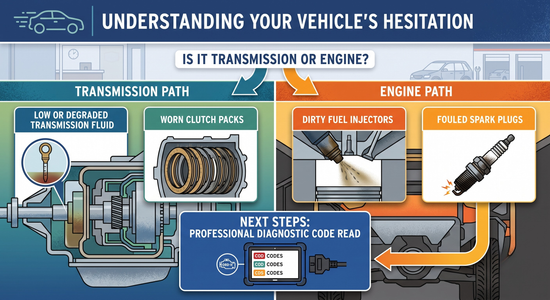
The transmission transfers engine power to the wheels and operates continuously during a road trip. Long highway drives, hills, heavy traffic, and a fully loaded vehicle can reveal shifting or temperature-related problems that are less noticeable during short local trips.
Schedule a transmission check if you notice delayed engagement, slipping, harsh or uneven shifts, unusual noises, a burning smell, leaking fluid, or a transmission warning light. A transmission health check may include reviewing fluid condition and level, checking for leaks, evaluating shift performance, and scanning the vehicle's computer systems for relevant fault codes.
A local Delaware Valley AAMCO can evaluate the transmission along with other vehicle systems before you leave for the Poconos, New England, or another holiday destination.
Pack a Winter Emergency Car Kit
Even a well-maintained vehicle can be delayed by a crash, road closure, severe weather, or another driver's accident. Keep emergency supplies in the vehicle throughout the winter, especially when traveling with children, older adults, or pets.
Vehicle and Roadside Supplies
- Heavy-duty jumper cables or a portable jump starter
- Portable tire inflator and tire-pressure gauge
- Usable spare tire, jack, and lug wrench
- Ice scraper and snow brush
- Collapsible snow shovel
- Flashlight with extra batteries
- Reflective warning triangles or road flares
- Small bag of sand or kitty litter for added traction
- Basic tool kit and phone charging cable
Passenger Safety Supplies
- Warm blankets or a winter-rated sleeping bag
- Extra winter clothing, hats, and waterproof gloves
- First aid kit and necessary medications
- Bottled water and non-perishable snacks
- Emergency contact information and roadside-assistance details
Schedule Your Pre-Trip Inspection
Plan your inspection about one to two weeks before departure. This leaves time to identify concerns, order parts if needed, and complete repairs without disrupting your travel plans.
Before your holiday drive, contact your local AAMCO of Delaware Valley to schedule a multi-point inspection or transmission health check. Addressing a concern before the trip can help you avoid an unexpected stop on a cold, congested highway.
Frequently Asked Questions
When should I schedule my holiday car inspection in the Delaware Valley?
Schedule your vehicle inspection at your local AAMCO about one to two weeks before your planned departure date. This provides enough time to order any necessary parts and complete repairs without delaying your travel plans across Pennsylvania, New Jersey, or Delaware.
What does a professional transmission health check involve?
A thorough transmission health check includes inspecting the transmission fluid for the proper level and color, as well as signs of burning or overheating. A technician may also run diagnostic tests on the vehicle's computer systems and check for sensor faults, performance concerns, or external fluid leaks.
How much does tire pressure drop in cold winter weather?
Tire pressure typically drops approximately one PSI for every 10-degree Fahrenheit decrease in outside temperature. Check your tire pressure when the tires are cold and adjust it to the vehicle manufacturer's recommended PSI, which is usually listed on the label inside the driver's-side door jamb.
Are winter-specific wiper blades worth the investment?
Winter wiper blades have a protective rubber shell that helps prevent ice and snow from clogging the blade's moving joints. This design helps the blades maintain even pressure against the windshield and provide clearer visibility during winter storms.
What survival items should I include in a winter emergency car kit?
Your winter emergency kit should include warm blankets, a first aid kit, extra winter clothing, waterproof gloves, bottled water, and non-perishable snacks. These supplies can help keep you and your passengers safer and more comfortable if you are stranded for several hours.
What tools should be in my winter emergency car kit?
A well-stocked winter emergency kit should include heavy-duty jumper cables, an ice scraper with a brush, a collapsible snow shovel, a portable tire inflator, a flashlight, and reflective warning triangles or road flares. A small bag of sand or kitty litter can also help create traction on slick or icy surfaces.
Should I let my car completely warm up before driving in freezing weather?
Modern fuel-injected engines typically need about 30 seconds to one minute of idling before driving. Drive gently for the first few miles while the engine, transmission, and other vehicle components reach their normal operating temperatures.
How do I check my tire tread depth at home?
Place a standard penny upside down into one of the deepest tire tread grooves. If you can see the top of Abraham Lincoln's head, the tread is less than 2/32 of an inch, and the tire should be evaluated for replacement. Because winter driving requires additional traction, consider having your tires professionally inspected before traveling in snow or icy conditions.
What is the most common cause of winter vehicle breakdowns?
Dead or severely weakened batteries are a common cause of winter vehicle breakdowns. Freezing weather slows the chemical reactions inside a battery, reducing its ability to provide the power needed to start the engine. A battery test before a long winter trip can identify a weak battery before it leaves you stranded.
Does using the car heater drain my battery while driving?
The heater fan uses electrical power, but while the engine is running, the alternator normally recharges the battery. Running the blower motor, lights, or other electrical accessories for an extended period while the engine is off can drain the battery.
Share