Winterizing Your Transmission: Does Cold Weather Affect Shifting?
As the temperature drops across the Delaware Valley, you might notice your car feeling a little sluggish or hesitant when you shift gears. Winter weather doesn't just make your morning commute chilly; it can actually impact the complex mechanics inside your vehicle. Understanding how cold weather affects your transmission is the first step to avoiding costly breakdowns and keeping your car running smoothly all season long.
When the winter winds whip off the Delaware River and frost covers your windshield, getting out of bed is hard enough. It turns out, your car feels the exact same way. If you have ever pulled out of your driveway on a freezing January morning in Bucks County and noticed that your car hesitates to shift gears, or shifts with a heavy, clunky thud, you are not alone. Across the greater area—from the historical stretches of Valley Forge to the bustling, stop-and-go lanes of the Schuylkill Expressway—drivers face a unique set of seasonal challenges. Unpredictable Nor'easters and plummeting thermometers can wreak havoc on your vehicle's intricate systems, particularly the transmission.
Often, drivers brush off these sluggish shifts as normal winter behavior, but ignoring them can lead to significant issues down the road. Whether you are navigating the steep, icy hills of Manayunk or commuting across the bridges into South Jersey, addressing cold weather transmission problems early is an essential part of responsible vehicle ownership. Your transmission is the vital bridge between your engine's power and your wheels. When it struggles, your entire vehicle's performance and safety are compromised. Let’s dive into why the winter chill affects your vehicle’s shifting capabilities and outline the steps you need to take to ensure your transmission survives the freezing months ahead in the Delaware Valley.
Viscosity Matters: How Cold Temperatures Lead to Thick Transmission Fluid
To understand why your car struggles to shift in the cold, you first need to understand the concept of viscosity. Viscosity refers to a fluid's resistance to flow. Think of the difference between pouring room-temperature water and pouring cold pancake syrup straight from the refrigerator. When temperatures drop, the fluids inside your vehicle behave much like that cold syrup. This is particularly true for your transmission fluid.
Transmission fluid serves a highly complex, dual purpose: it acts as a hydraulic fluid to facilitate internal gear shifts and as a critical lubricant to prevent the metal components from grinding against one another. In ideal temperatures, this fluid flows freely, creating seamless and unnoticeable gear transitions. However, when the Delaware Valley is hit with a deep freeze, you are suddenly dealing with thick transmission fluid.
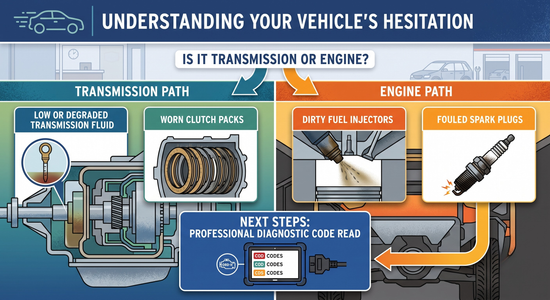
Because the fluid is viscous and sluggish, it cannot travel through the transmission's internal valves and narrow pathways as quickly as it should. This delay in fluid pressure directly translates to delayed shifts. You might press the accelerator as you merge onto Route 1 and feel the engine rev higher than normal before the car finally clunks into the next gear. This is one of the most classic cold weather transmission problems. While a slight delay is somewhat expected when temperatures are in the single digits, severe or prolonged hard shifting is a sign that the transmission is struggling to lubricate itself. Pushing the vehicle too hard in this state can cause accelerated wear and tear on the clutch plates, gears, and internal bearings.
Seal Protection: Defending Against Brittle Rubber and Leaks
The cold doesn't just affect the fluids inside your vehicle; it takes a toll on the physical components holding everything together. Your transmission is a pressurized, sealed system relying on a network of rubber gaskets, O-rings, and seals to keep the transmission fluid exactly where it belongs. Unfortunately, extreme cold is the natural enemy of rubber.
As temperatures plummet below freezing across Pennsylvania, New Jersey, and Delaware, rubber materials naturally contract, lose their elasticity, and become hard and brittle. This physical change poses a serious threat to your transmission's integrity. A seal that was perfectly pliable and watertight in the balmy heat of a July road trip to the Jersey Shore might shrink just enough in January to allow a tiny pathway for fluid to escape. Navigating the pothole-ridden stretches of I-476 (the Blue Route) with stiff, brittle seals only increases the likelihood of a crack or rupture.
If these seals fail or crack due to the cold, you will start losing transmission fluid. As we’ve established, fluid is the lifeblood of the system. A leak leads to low fluid levels, which compounds the issue of thick transmission fluid. With less fluid available to do the job, the transmission runs much hotter once warmed up, loses vital hydraulic pressure, and experiences slipping gears or total transmission failure. If you notice a reddish or brownish puddle under your car on the frosty pavement, it is imperative to bring your vehicle into your local
AAMCO Delaware Valley center immediately. Replacing a brittle seal is a minor fix; replacing a burned-out transmission because all the fluid leaked out is a major ordeal.
Winter Checklist: Fluids, Viscosity, and Winter Car Prep
Proper winter car prep is your best defense against seasonal breakdowns. Before you load up the car for a ski trip to the Poconos or head out for holiday shopping at the King of Prussia Mall, your transmission requires specific attention. One of the most effective ways to combat cold weather transmission problems is to evaluate the type of fluid running through your system.
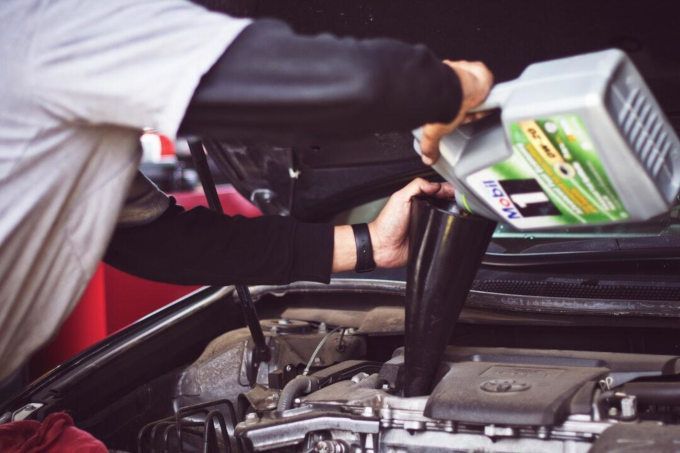
Depending on your car’s make, model, and the manufacturer's specific recommendations, switching to synthetic fluids can drastically improve your vehicle’s low-temperature performance. Synthetic transmission fluids are engineered in a laboratory to maintain a more consistent viscosity across a much wider range of temperatures. Unlike conventional petroleum-based fluids, synthetics do not contain the naturally occurring waxes and impurities that solidify in the cold. This means synthetic transmission fluid will flow almost as easily at 10 degrees as it does at 70 degrees, ensuring your transmission gets immediate lubrication and hydraulic pressure the moment you put the car in drive.
This principle applies directly to your engine oil as well, which plays a massive part in how easily your vehicle turns over and warms up in the morning. For example, your manufacturer might recommend varying oil viscosity depending on seasonal temperatures—such as a standard 5W-30 for moderate weather, but a 0W-40 for extreme winter conditions. The "W" in these ratings stands for Winter. A "0W" oil flows much easier in freezing temperatures than a "5W" oil, reducing engine friction and wear during cold starts. While engine oil and transmission fluid operate in different systems, the core concept remains the same: the right viscosity and synthetic composition can be the difference between a smooth winter commute and being stranded on the side of the road. Always consult your owner's manual or speak to an expert technician at your local AAMCO Delaware Valley center before changing fluid types to ensure total compatibility with your specific vehicle.
Trust AAMCO Delaware Valley With Your Winter Driving Needs
Winter driving in the Delaware Valley is unpredictable enough without having to worry about your vehicle's reliability. Don't let cold weather transmission problems put a freeze on your daily life. Whether you are experiencing delayed shifts on your morning commute down Broad Street, suspect a fluid leak due to brittle seals, or simply want to ensure your winter car prep is handled by the best in the business, we are here to help.
At your local Delaware Valley AAMCO center, our expert technicians understand the intricate needs of your transmission, no matter the season or the local forecast. Schedule an appointment today to check your transmission fluid, inspect your seals, and get your car thoroughly winter-ready. From fluid exchanges to comprehensive diagnostics, trust
AAMCO Delaware Valley to keep you shifting smoothly all winter long.
Frequently Asked Questions (FAQs)
What are the most common cold weather transmission problems I should look out for?
When the temperature drops significantly, your transmission faces several unique operational hurdles. The most frequent issue drivers report is delayed or hard shifting. You might notice that your vehicle takes longer to engage when shifting from Park to Drive, or that the transition between gears feels incredibly jerky and forceful rather than smooth. This is primarily caused by the fluid inside the transmission thickening in the cold, which slows down the internal hydraulic pressure needed to operate the gear clutches. Additionally, drivers may experience slipping gears, where the engine revs but the vehicle doesn't accelerate proportionally. You should also be on the lookout for unexpected fluid leaks, as freezing temperatures can cause the rubber seals and gaskets that keep the fluid contained to harden, shrink, and crack. If your vehicle exhibits any of these symptoms, it is a clear indicator that the winter weather is stressing your transmission components, and a professional inspection is warranted.
How does stop-and-go traffic on the Schuylkill Expressway impact a cold transmission?
Navigating heavy, stop-and-go traffic in freezing weather puts a unique strain on your transmission. When your car has been sitting in the cold and you immediately merge into a traffic jam, the transmission fluid hasn't had adequate time to reach its optimal operating temperature and thin out. Constantly shifting between first and second gear while the fluid is still thick and sluggish forces the transmission's internal pump to work overtime. This lack of proper lubrication during repetitive, low-speed shifting can cause excess friction and wear on the clutch plates. To minimize this strain, try to drive as gently as possible, avoiding aggressive, sudden acceleration when traffic momentarily clears. Giving your vehicle a few miles of gentle driving before hitting heavy congestion is always the safest bet for your transmission's longevity.
How do I know if I have thick transmission fluid?
Thick transmission fluid is an invisible problem that makes itself known entirely through how your vehicle feels and drives. Since you cannot physically see the fluid thickening inside the closed transmission case, you must rely on the sensory feedback your car provides. The most prominent symptom is a noticeable sluggishness when shifting gears. If your automatic transmission feels like it is holding onto a gear for too long before shifting up, or if the shift itself feels heavy and laborious, the fluid is likely too viscous. In manual transmissions, thick fluid often manifests as a physical stiffness in the gear shifter; you may find it requires significantly more physical effort to push the stick into the next gear. Furthermore, you might hear a whining noise coming from the transmission area. This noise is often the sound of the transmission pump struggling to circulate the cold, syrup-like fluid. Once the vehicle reaches its normal operating temperature after a few miles of driving, these symptoms should disappear. If they persist, the fluid may be degraded and require changing.
Can extreme cold permanently damage my transmission?
While cold weather itself doesn't directly break the robust metal components of your transmission, the secondary effects of the cold can absolutely lead to permanent and costly damage if ignored. The danger lies in operating the transmission under high stress before the fluid has warmed up to its proper viscosity. When transmission fluid is thick from the cold, it fails to provide adequate lubrication to the fast-moving metal gears, bearings, and clutch plates. If you aggressively accelerate while the fluid is in this state, the lack of lubrication can cause excessive friction, leading to premature wear, overheating, and scoring of the metal parts. Over time, this wear accumulates and can lead to a total mechanical failure. Additionally, if the cold weather causes your rubber seals to become brittle and leak, driving with low fluid levels will quickly cause the transmission to self-destruct. Proper winter driving habits and proactive maintenance are essential to preventing the cold from causing permanent harm.
What is the difference between synthetic and conventional transmission fluid in winter?
The primary difference between synthetic and conventional transmission fluid lies in their molecular structure and how they react to temperature extremes—especially the wild temperature swings we often see in the tri-state area. Conventional transmission fluid is refined from crude oil. While it performs well under normal conditions, it contains naturally occurring wax molecules and impurities. When temperatures plunge, these waxes begin to crystallize, causing the fluid to thicken significantly and lose its flowability. Synthetic transmission fluid, on the other hand, is artificially engineered in a laboratory. It is designed with a uniform molecular structure and is free of the impurities found in conventional oil. Because of this pure formulation, synthetic fluid resists thickening in extreme cold. It maintains a much more consistent viscosity, meaning it flows easily and provides instant lubrication even in sub-zero temperatures. Upgrading to a synthetic fluid is a highly recommended winter car prep step, as it ensures your transmission operates smoothly from the very first shift of the day.
How can I tell if my transmission seals are leaking due to the cold?
Identifying a transmission leak early can save you from catastrophic transmission failure. The most obvious sign of a leak is finding a puddle or spotting fluid on your driveway or garage floor beneath the center-front of your vehicle. Transmission fluid is typically dyed red, though older fluid may look brownish or even dark grey if it is severely degraded. It has a slick, oily consistency and a somewhat sweet or tart smell, distinct from the smell of engine oil. In addition to visual spotting, you might notice secondary symptoms while driving. If your transmission fluid is leaking, the internal fluid level will drop. Low fluid levels lead to slipping gears, delayed engagement, overheating, and a burning smell coming from under the hood or through the air vents. Since extreme cold can cause rubber seals to shrink and crack, it is wise to routinely check the ground under your car during the winter months.
Does winter car prep actually save money on transmission repairs?
Absolutely. Winter car prep is a proactive investment in preventative maintenance that pays for itself many times over by helping you avoid major mechanical failures. Cold weather puts an enormous amount of strain on every system in your vehicle, especially the transmission. By taking the time to have your fluid levels checked, evaluating the condition of your transmission fluid, and ensuring your seals are intact before the deep freeze sets in, you can catch minor issues before they escalate. For instance, replacing old, degraded transmission fluid with fresh, winter-appropriate synthetic fluid costs a fraction of what it takes to rebuild or replace a burned-out transmission. Similarly, identifying a small seal leak early prevents you from driving with critically low fluid, which is the leading cause of internal transmission damage. A comprehensive winter prep inspection at an AAMCO Delaware Valley center provides peace of mind and protects your wallet from surprise winter repair bills.
When should I bring my car to AAMCO Delaware Valley for a winter inspection?
The ideal time to bring your vehicle to an AAMCO Delaware Valley center for a winter transmission inspection is in late autumn, right before the consistent freezing temperatures arrive in the Delaware Valley. Preparing your car in October or November ensures that your fluids, seals, and internal components are ready to handle the first major cold snap. However, if winter is already underway and you have not had your vehicle inspected, it is never too late. You should immediately schedule an appointment if you begin to experience any of the classic cold weather transmission problems, such as delayed shifting, hard clunking sounds, slipping gears, or if you spot any reddish fluid leaking beneath your car. Even if your car seems to be running fine, a mid-winter checkup can ensure that your fluid viscosity is appropriate and that the cold has not compromised any vital seals. Don't wait for a breakdown to seek professional help.
Share